How to Start an Online Business from Home in India (2026 Guide)

Updated November 2026 | STAENZ Academy
Quick answer: To start an online business from home in India, choose a specific customer problem, validate demand with real buyers, select a business model, calculate costs, set up a simple sales channel, check applicable registrations, and market your offer. You can begin with services, digital products or a small online store—but no business model guarantees a particular monthly income.
Starting from home can reduce office costs, but it does not eliminate the need for research, customer service, compliance or consistent marketing. This updated guide replaces outdated “easy money” advice with practical steps for 2026 and beyond.
10 Online Business Ideas You Can Start from Home
Freelance Digital Marketing Services
Help small businesses with search engine optimisation (SEO), social media, content, email marketing or reporting. Start with one clearly defined service and a small portfolio. Avoid promising guaranteed leads or rankings.
Performance Marketing Consultancy
Manage Google Ads or Meta Ads for businesses with an appropriate budget and conversion tracking. Learn how to calculate acquisition costs and report results before taking responsibility for client spending.
Online Tutoring or Skills Coaching
Teach a subject or professional skill you know well through live sessions. Define the audience, learning outcomes, session schedule and refund policy. Student testimonials should be genuine and permission-based.
Content Writing and SEO Content Services
Offer researched articles, website copy, newsletters and content updates. AI can speed up drafting, but fact-checking, original insight and editing remain essential.
Video Editing and Short-Form Content Production
Serve creators, local brands and educators with reels, advertisements and educational videos. A sample reel and reliable delivery process often matter more than an expensive studio.
Digital Products and Templates
Create original planners, spreadsheet templates, design assets, guides or learning resources. Validate demand before building a large catalogue, and respect copyright and platform policies.
Ecommerce or Niche Product Store
Sell a focused selection of physical products using a marketplace or your own storefront. Calculate sourcing, packaging, shipping, returns, marketplace fees, taxes and advertising before setting prices.
Affiliate Content Business
Build useful comparisons, tutorials or a niche community and earn commissions from eligible referrals. Clearly disclose affiliate relationships and avoid misleading product claims.
AI Automation Services for Businesses
Build practical workflows for enquiry routing, appointment reminders, reporting or customer support using authorised tools. Test reliability, human escalation and data privacy before deployment.
Virtual Assistance and Business Operations
Help founders with scheduling, CRM updates, research, documentation and customer coordination. Use clear contracts and secure handling of client information.
Which Home Business Model Is Right for You?
| Business model | Typical starting need | Main challenge |
|---|---|---|
| Freelancing or consulting | Marketable skill, portfolio, laptop | Finding and retaining clients |
| Online teaching | Subject expertise and teaching plan | Trust and learner outcomes |
| Digital products | Original product and distribution channel | Demand and discoverability |
| Ecommerce | Inventory or sourcing, logistics, working capital | Margins, returns and cash flow |
| AI automation agency | Workflow skills, testing and security | Reliability and client adoption |
Service businesses may be easier to test with limited capital, while ecommerce usually introduces more logistics and cash-flow complexity. Actual startup costs depend on the offer and operating model.
How to Start an Online Business from Home: Step-By-Step
Step 1: Choose a Niche and a Real Problem
Instead of targeting everyone, define a specific buyer and problem. For example, a freelancer might help local clinics improve appointment enquiries, while a video editor might specialise in educational short videos.
Step 2: Validate Demand Before Spending Heavily
Interview potential customers, review existing competitors, test a simple offer and try to secure a small paid pilot. Likes and compliments are weaker evidence than actual purchase intent.
Step 3: Work Out Pricing and Unit Economics
List direct costs, tools, delivery time, platform fees, payment charges, taxes and expected marketing expenses. Calculate your contribution margin and break-even point before scaling.
Step 4: Build a Simple Digital Presence
Create a clear landing page or business profile explaining the problem you solve, what is included, pricing or enquiry steps, and how customers can contact you. Add genuine work samples and clear terms.
Step 5: Check Business Registration and Compliance
Depending on your activity, location and turnover, you may need GST registration, sector-specific permissions, a suitable business structure or local registrations. The Government of India’s official Udyam portal offers free MSME registration for eligible businesses. GST rules can differ for services, goods, interstate transactions and ecommerce marketplaces; confirm requirements with a qualified professional and the GST portal. Food sellers should also check FSSAI requirements.
Step 6: Set up Payment and Delivery Processes
Keep clear records of invoices, receipts, refunds and customer communications. For services, use a written scope of work, delivery timeline and revision policy.
Step 7: Attract Your First Customers
Begin with relevant outreach, referrals, useful content, local search visibility and professional networks. Paid ads can help after you have evidence that the offer converts; they should not be the first substitute for product-market fit.
Step 8: Measure and Improve
Track enquiries, qualified leads, conversion rate, average order value, acquisition cost, repeat purchases and contribution margin. Focus on profitable, satisfied customers rather than vanity metrics.
Can You Earn ₹50,000 per Month from an Online Business?
It is possible for some businesses, but it is not guaranteed and should never be presented as a typical result. Revenue and take-home profit are different. For example, five clients paying ₹10,000 per month generate ₹50,000 in monthly revenue; software, contractors, marketing, taxes and other expenses reduce the amount retained. Client acquisition and retention may take months, and some businesses never reach this level.
How Much Money Do You Need to Start?
A skill-based service can sometimes be tested using equipment you already own, while a product business may require inventory, packaging, logistics and working capital. Build a budget for three categories: setup costs, recurring expenses and an emergency buffer. Avoid purchasing expensive subscriptions before you have validated customer demand.
How Digital Marketing and AI Skills Help Home Businesses Grow
Search optimisation helps people discover your offer; performance marketing helps test acquisition channels; analytics reveals what converts; and AI automation can reduce repetitive administrative work. None replaces a strong product, trustworthy delivery or customer support.
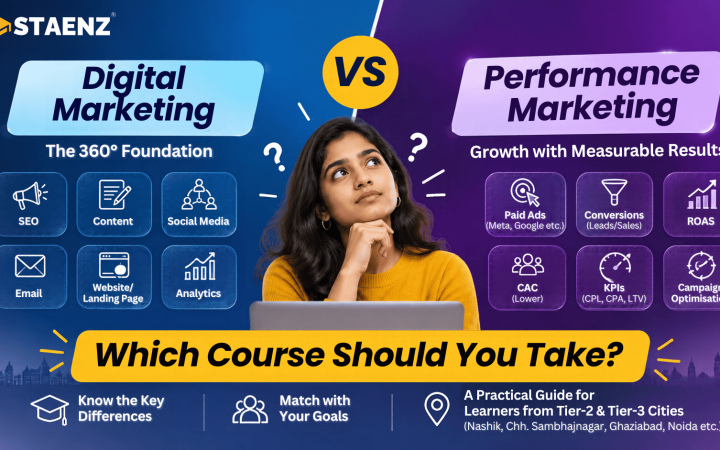
If you want structured, practical learning, explore STAENZ Academy’s digital marketing course in nashik and its course comparison guide. The academy offers learning paths in digital marketing, performance marketing and AI-related skills. You can also read what AI-driven digital marketing means and explore AI tools for digital marketing. Confirm current course availability, fees and delivery formats on the official pages.
A Practical 30-Day Launch Plan
- Days 1–7: Choose a niche, interview prospective customers and identify competitors.
- Days 8–14: Define a small paid offer, costs, positioning and a basic landing page.
- Days 15–21: Test outreach, gather feedback, check legal requirements and deliver a pilot.
- Days 22–30: Improve the offer, document results, build a repeatable sales process and plan the next month.
Frequently Asked Questions
What Is the Easiest Online Business to Start from Home?
For someone with an existing marketable skill, freelancing or online tutoring may require less upfront investment than inventory-based ecommerce. Ease depends on your experience and ability to find paying customers.
Can I Start an Online Business Without Investment?
You may be able to test a service with tools you already own, but there are still costs in time, internet access, delivery and customer acquisition. A truly zero-cost business is uncommon.
Do I Need GST Registration for an Online Business in India?
Not every small business needs it immediately. Requirements depend on turnover, type of supply, geography and selling channel. Marketplace and interstate rules can be more complex, so verify the current rules before selling.
Which Online Business Is Best for Students?
Students can explore tutoring, editing, design, content services or digital marketing projects, provided they have the skills and time to deliver responsibly. Start with a manageable pilot rather than an income promise.
Can AI Run My Online Business Automatically?
AI can help draft content, organise enquiries, analyse data and automate approved workflows. Human oversight remains important for accuracy, customer relationships, privacy and financial decisions.
How Long Does It Take to Become Profitable?
There is no universal timeline. Profitability depends on demand, margins, startup costs, repeat business and execution. Track actual cash flow rather than relying on advertised success stories.
Final Thoughts
The best online business to start from home is one that solves a genuine problem for a specific audience and can deliver value consistently. Start small, test with real customers, learn essential marketing and business skills, and scale only when the numbers support it.
Want to build the skills behind a digital-first business? Explore STAENZ Academy programs or book a demo class.
Editorial note: This educational article is published by STAENZ Academy. Examples are illustrative, not earnings forecasts or legal or tax advice. Last reviewed November 2026.
Related Reading
Explore these related STAENZ guides for practical next steps: